How to Handle a One-Ring Call (and Why Not to Call Back)
Quick Answer
A one-ring call is a call that rings once and stops, so all you see is a missed call from a number you don't know. The FCC advises not calling these numbers back. A return call can connect to a number outside the U.S. and bring connection and per-minute charges. Check the area code first, then report the call if you like.
On this page
Key Takeaways
- A one-ring call rings once, then hangs up, leaving a missed call from an unfamiliar number.
- The FCC says not to return one-ring calls from numbers you don't recognize.
- A number that looks American can be an international call. Our list of non-U.S. area codes has 21 of them.
- An area code shows where a number was first assigned. It is not proof of where the caller is or who they are.
- If you were charged, check your bill, ask your carrier, and report the call to the FCC or FTC.
What Is a One-Ring Call?
You are cooking dinner or sitting in a meeting. Your phone buzzes once, then goes quiet. You look down and see a missed call from a number you don't know. That is a one-ring call.
The FCC describes this pattern on its "One Ring" phone scam page. The call is over before you can answer, and the number on your screen invites you to call it back [1]. The whole idea depends on your curiosity. If you never call back, nothing else happens.
Some missed calls are harmless. A delivery driver may hang up early, or a friend may dial the wrong number. The difference is the number. If you know it, call back as usual. If you don't, treat the missed call as a question, not as an order to call.
Why Is Calling Back a Bad Idea?
The FCC's advice is short: don't return one-ring calls from numbers you don't recognize. It explains why. Calling back can connect you to a number outside the U.S., and that can bring connection charges and per-minute charges that are billed as premium, international or toll calls [1].
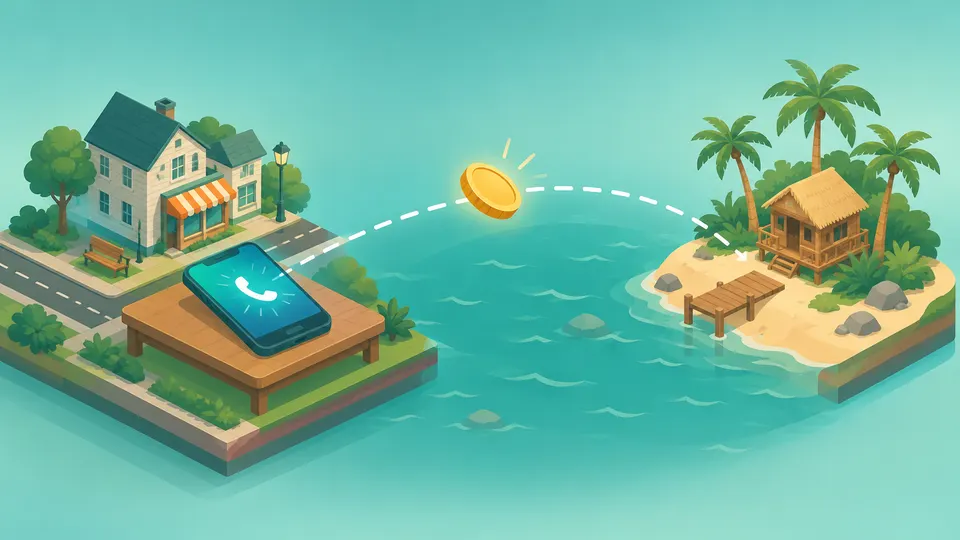
The drawing below shows the idea. The number on your screen looks like any other phone number. The path your return call takes does not stay in the U.S.
The key point is that the number looks local. A U.S. phone number has three parts: an area code, then seven more digits. Many islands outside the U.S. use the same format. So the call you return can leave the country without any sign on your screen. The FCC tells people to check whether an area code is international before they call [1].
The word "premium" means a call billed at a higher rate than a normal call. How much, if anything, you would be charged depends on your carrier and your plan. That is why the safest move is also the simplest: don't call.
Which Area Codes Are Really International Calls?
Our data has a list of North American Numbering Plan area codes that serve places outside the United States. The North American Numbering Plan is the shared system that gives the U.S., Canada and many Caribbean countries the same style of phone number. Our non-U.S. area code list has 21 codes. Calling them from the U.S. is an international call even though the number looks like a U.S. number.
For example:
- 876 serves Jamaica. It has been in service since 1997 and shares its area with the 658 overlay (a second code added to the same area).
- 809 serves the Dominican Republic. It has been in service since 1958 and shares its area with 829 and 849.
- The full list covers other Caribbean islands and countries, from the Bahamas to Trinidad and Tobago.
The FCC names 809 (Dominican Republic) and 232 (Sierra Leone) as examples in its one-ring page. They are examples only, not a complete list. The same page asks you to check whether an area code is international [1].
Two things to keep in mind. First, an international area code does not mean the caller did anything wrong. People have family, friends and businesses in those places. The only fact the code tells you is that a return call would be international. Second, the opposite is also true: a U.S. area code does not make a call safe or wanted. Our area code lookup shows where a code is assigned. It does not tell you who is calling.
Our list keeps U.S. territories such as Puerto Rico, Guam and the U.S. Virgin Islands in the U.S. table, so they are not part of the 21 non-U.S. codes. For how we build the list, see our methodology.
What Should I Do Right After a One-Ring Call?
You don't have to do much. Most of the work is not doing something. Follow these steps in order.
- Don't call back. If the number is not in your contacts and you were not expecting a call, leave it alone. The FCC advises not returning one-ring calls from numbers you don't recognize [1].
- Look at the area code. Type the first three digits into our area code lookup. If it is on the non-U.S. list, a call back would be international.
- Run the quick check. Our Should I Call Back? tool walks through a few plain questions and gives a calm answer. It does not look up the owner of the number.
- Block the number if you like. Your phone's settings let you block a number so it can't ring again. Blocking helps with repeats from that one number, but callers can switch numbers.
- Move on. If the number matters, such as a doctor, bank or school, find its official number on the organization's own website or a bill, and call that instead.
Step 5 matters because of spoofing. Spoofing means caller ID is changed to show a different number than the real one. The FCC says caller ID can be faked, so the number on your screen may not belong to the person calling. Its advice is not to answer unknown numbers, and if a caller claims to be from a company or agency you know, to hang up and call the official number [2]. For more on what a number can and can't tell you, read how to find out where a call came from.
What If I Already Called Back?
It happens, and it is not a reason to panic. Here is a calm plan.
First, hang up and don't call again. Second, write down the number, the date and the time. Third, look at your next bill or your online account for charges you don't recognize. Ask your carrier about any charge you didn't expect. The FCC says return calls to these numbers can bring charges billed as premium, international or toll calls, so a bill is the place to look [1].
If a charge shows up, contact your carrier and describe what happened in plain words. Carriers handle billing questions every day. Keep your notes handy, since they help the carrier find the call. We can't tell you how a specific carrier will respond, because each one sets its own rules.
Don't give out card numbers, passwords or one-time codes to anyone who calls you, even if the number looks familiar. If someone claims to be a bank or a company you use, hang up and call the number printed on your card or bill.
How Do I Report a One-Ring Call?
Reporting is optional. You have two official places to go:
- The FCC. File a complaint at the FCC Consumer Complaint Center [3] (retrieved 2026-11-19). The FCC is the agency that wrote the one-ring advice.
- The FTC. Report the call at ReportFraud.ftc.gov [4] (retrieved 2026-11-19). The FTC runs the federal fraud reporting site.
Have the phone number, the date and time, and anything you remember ready before you start. If you were charged, add the amount. A report is a record for the agencies, not a way to trace a number. It tells the official agencies what people are receiving.
Frequently Asked Questions
Is it safe to call back a missed call from an unknown number?
The FCC advises against returning one-ring calls from numbers you don't recognize, because a return call can reach a number outside the U.S. and bring charges billed as premium, international or toll calls. If you know the caller, call back as normal.
How do I know if an area code is international?
Look up the first three digits in our area code lookup or check the non-U.S. list. If the code serves a place such as Jamaica (876) or the Dominican Republic (809), a call to it from the U.S. is an international call.
Does a U.S. area code mean the call is really from the U.S.?
No. An area code shows where a number was first assigned, and caller ID can be faked, according to the FCC [2]. Neither the code nor the display proves where the caller is.
Our Take
We think the best answer to a one-ring call is boring: do nothing. The call is built to make you curious, and curiosity is what costs money. We also think the internet gets this wrong in the other direction, with lists of "bad" area codes that make people fear their cousins in Kingston or Santo Domingo. An international area code tells you one thing, which is that a return call would be international. It says nothing about the person. That is why our tools show where a code is assigned and never who owns a number. When you aren't sure, pause, check the code, and if the call matters, use an official number you found yourself.
Sources
- 'One Ring' Phone Scam. FCC, 2019.
- Caller ID Spoofing. FCC, 2024.
- FCC Consumer Complaint Center. FCC.
- ReportFraud.ftc.gov. FTC.
An area code shows where a number was first assigned, not where the caller is or who they are. Numbers move with people and caller ID can be spoofed. Spotted an error? Tell us.
More Area Code Guides
How to Find Out Where a Call Came From (and What an Area Code Can't Tell You)
An area code shows where a number was first assigned, not where the caller is. Learn what it can tell you, what it can't, and the safer steps to take.