What Is an Area Code Overlay? How a Second Code Shares Your Area
Quick Answer
An area code overlay adds a second (or third) area code to the same place instead of cutting the place in two. People who already have a phone number keep it, area code included. New lines may get the new code. Because two codes now cover one area, local calls need all ten digits: area code plus the seven-digit number.
On this page
- What exactly is an area code overlay?
- How is an overlay different from an area code split?
- Why does an overlay mean you must dial ten digits?
- What happens to your phone number when an overlay arrives?
- Where have overlays already happened?
- How can you tell what a code in an overlay means?
- Frequently Asked Questions
- Our Take
- Sources
Key Takeaways
- An overlay puts more than one area code on the same map area. A split divides one area into smaller parts.
- Your existing phone number does not change when an overlay arrives.
- Local calls in an overlay area use ten digits, and some areas also need a 1 first.
- Neighbors can have different area codes and still call each other as local calls.
- An area code shows where a number was first assigned, not where the person is today.
What exactly is an area code overlay?
An area code is the first three digits of a ten-digit U.S. phone number, such as the 212 in (212) 555-0100. Every area code covers a region. When a region runs low on unused phone numbers, regulators have to add more. An overlay is one way to do it.
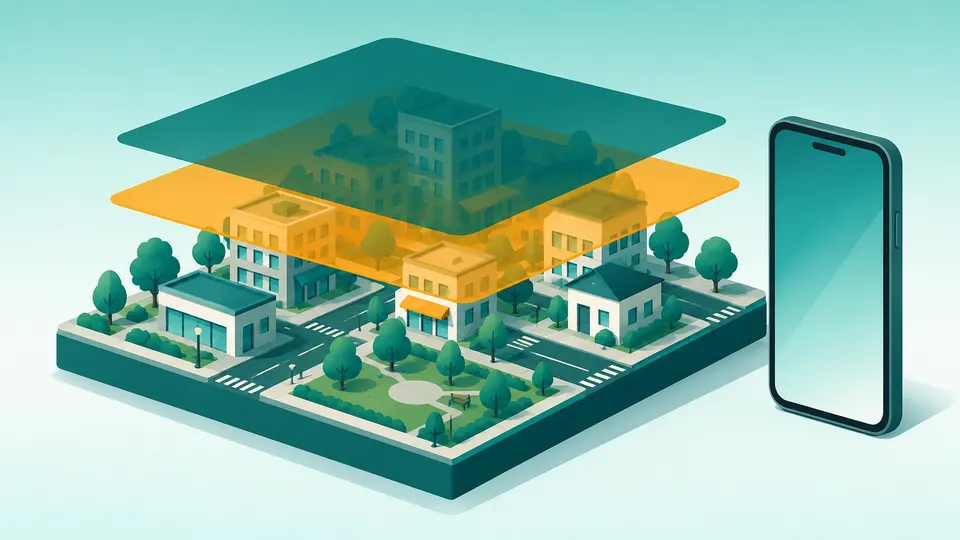
The California Public Utilities Commission (CPUC) describes it this way: an area code overlay "typically adds a second area code to the same geographic region" [1]. The old code stays. A new code is placed over the same streets, like a transparent sheet laid over a map.
The picture below shows this for Manhattan. Our data lists three codes for the island: 212, 646 and 332. Each one covers the same ground.
Overlays usually appear when a region is close to running out of unused phone numbers. Adding a layer is a way to make room without disturbing anyone who already has a number. Cell phones, home lines, offices and internet phone lines all draw from the same pool, so demand adds up fast in busy cities.
This is why one street can hold neighbors with different area codes. The code on a phone number mostly tells you when the number was first handed out, not which side of town it sits on.
How is an overlay different from an area code split?
Before overlays were common, many regions used a split. A split cuts an old area into smaller parts. Each part gets its own code. As the CPUC puts it, under a split a location has only one area code, and some customers have to change to the new one depending on where their phone is [1].
An overlay avoids that. Nobody has to move to a new code. The tradeoff is dialing: with a split, the dialing pattern stays the same, and with an overlay, local calls become ten-digit calls.
A split can make some people change a number that is printed on business cards, signs and bank forms. That is the main reason many areas choose overlays.
Why does an overlay mean you must dial ten digits?
Phone numbers are only unique when you include the area code. Two different homes can share the same seven digits if their area codes differ. In a region with one code, you can leave the area code off for local calls. Once two codes cover the same ground, the phone network needs to know which one you mean.
That is the reason for ten-digit dialing. The CPUC notice for the 738 overlay says callers must dial 1 plus all ten digits for local calls, including calls between 213, 323 and 738, and that telephone numbers, including the current area code, will not change [2]. The FCC also keeps an archived consumer guide on this topic [5].
Whether you must add a 1 depends on the area and the carrier. California's rule is 1 plus ten digits, as the CPUC says. Other states may differ, so check your carrier or the state commission notice. We walk through the patterns in Why Do I Have to Dial 10 Digits?, and you can test a number's format with our Number Format Check.
One safety point is worth knowing. The CPUC says people can still dial just three digits to reach 9-1-1 [1].
What happens to your phone number when an overlay arrives?
Almost nothing, and that is the point. The CPUC FAQ says current customers keep their telephone number and area code during an overlay. The New York State Public Service Commission uses nearly the same words for the newest New York City code: current telephone numbers, including the current area code, will not change [3].
In practice, here is what changes and what does not.
| Item | During an overlay |
|---|---|
| Your current number | Stays the same, area code included |
| Your area code | Stays the same |
| A new line or new customer | May be given the new code once the old numbers run out |
| Local calls | Dial ten digits (area code plus seven digits) |
| Call prices and local calling areas | The CPUC says the 738 overlay left them the same |
| Dialing 9-1-1 | Still three digits |
Two practical tips help, and neither costs anything. First, save every contact with the full ten digits, so your phone dials correctly from anywhere. Second, update anything that dials a number automatically, such as a home alarm, a medical alert button or a fax line. Some older equipment was set up with seven-digit dialing, and it may need a quick change to keep working. If you are not sure how to change it, ask the company that installed or monitors the device. A call to your carrier is also a fine place to start, and it is better to ask before the change date than after.
New numbers in the added code do not appear right away. In New York, the new 465 code went live on June 18, 2026, but the commission says its numbers are not available until the numbers in 347, 718, 917 and 929 run out. The release gives the third quarter of 2027 as the time assignments could begin [3].
Where have overlays already happened?
Overlays are common. A few places in our data show how the pattern looks over time.
- Manhattan. 212 has been in service since 1947. 646 was added in 1999 and 332 in 2017. 917, in service since 1992, covers all of New York City.
- Miami. 305 dates from 1947. 786 was added in 1998 and 645 in 2023.
- Los Angeles. 213 dates from 1947. 323 came in 1998 and 738 in 2024. The CPUC notice says customers could be assigned 738 numbers from November 1, 2024.
The timeline below shows the New York City codes by the year each entered service, according to our data. The Manhattan codes are teal. The newest, 465, is highlighted in amber.
Overlays are still being added. North Carolina's utilities commission approved 451 as an overlay for the 828 area in western North Carolina in an order dated September 8, 2026, and the dates for ten-digit dialing and the first 451 numbers have not been set [4]. We track notices like this on our Area Code Updates page.
How can you tell what a code in an overlay means?
Not much, and that is worth saying plainly. In an overlay area, 212, 646 and 332 are equal. A 332 number is not "newer" in any way that matters to the caller. It only means the number was assigned after the others ran short.
An area code shows where a number was first assigned. It does not show where the person is now. Numbers can move with their owners, calls can be forwarded, and caller ID can be faked. The FCC explains caller ID spoofing in its own consumer guide [6], and we cover the limits of area codes in How to Find Out Where a Call Came From.
If an unknown call from an overlay code worries you, a good first step is our Should I Call Back? tool. To read about any code, use our area code lookup tool or browse the full list of area codes.
Frequently Asked Questions
Will I have to get a new phone number when an overlay starts?
No. Under an overlay, existing customers keep their telephone numbers and area codes. Only new lines may be assigned the new code, and usually only after the old numbers run out.
Do I need to dial 1 before the area code?
It depends on where you are. The CPUC says callers in California's overlay areas dial 1 plus the ten digits for local calls. Other states and carriers can use different rules, so check your carrier or state commission notice.
Can I still use seven digits for local calls?
In an overlay area, generally not. Ten digits are needed because more than one area code shares the same place. Make sure alarms, medical alert devices and saved contacts use the full ten digits.
Does an overlay change my phone bill?
Not by itself. The CPUC notice for the 738 overlay says call prices and local calling areas stay the same. Check your own carrier if you are unsure about your plan.
Our Take
We think overlays are the fairer fix for a crowded area, even though ten-digit dialing is a small hassle at first. A split forces some people to change a number they have used for years, and an overlay does not. The part we would change is how notices reach older adults and small businesses: a clear letter from the carrier, plus a reminder to update alarms and saved contacts, would prevent most trouble. Our advice is simple. Save every number with its area code, ignore the idea that an older code is "better," and treat any unknown call with the same calm care no matter which code it shows.
Sources
- Area Code Frequently Asked Questions. California Public Utilities Commission, 2008.
- New 738 Area Code Coming to the 213/323 Region. California Public Utilities Commission, 2024.
- Additional New York City Area Code Activated to Accommodate Future Demand. New York State Public Service Commission, 2026.
- 828 Area Code Press Release. North Carolina Utilities Commission, 2026.
- Ten-Digit Dialing (archived). FCC, 2022.
- Caller ID Spoofing. FCC, 2024.
An area code shows where a number was first assigned, not where the caller is or who they are. Numbers move with people and caller ID can be spoofed. Spotted an error? Tell us.